Who are we?
How we started
In 2008, Viitor Plus – for people and nature, launched the Adopt a Tree afforestation programme, based on the importance of restoring degraded land and raising awareness of the vital role forests play in maintaining the balance of life.
Between 2008 and 2016, under the umbrella of Viitor Plus, more than 10,000 volunteers contributed to growing 36 hectares of new forest. In addition, funds were raised for another 21 hectares. The entire 57 hectares were transferred to the Pădurea Copiilor Association for management in July 2016, when the association separated from Viitor Plus.
Since November 2016, the Viitor Plus Association has continued its afforestation activities through the Adopt a Tree project. We have aimed to continue making an important contribution to growing new forests and protecting forested areas in Romania, with a focus on forest shelterbelts and by involving as many people as possible in this effort.
Our vision
To rediscover our connection with nature together and invest in what we leave behind.
Our mission
It is divided into three areas:
- 1. We grow new forests in southern Romania to mitigate and adapt to climate change.

2. We inspire people to adopt responsible behaviours related to the consumption of forest resources.

3. We contribute to educating the public about the importance of forests.
Our values
- 1. Integrity
- 2. Transparency
- 3. Leading by example
- 4. Consultation with stakeholders
- 5. A tailored, practical and long term approach
- 6. Replicability
- 7. Promoting a balanced and harmonious life
Frequently asked questions
- 🌱 About the organisation
Adopt a Tree is Viitor Plus’s afforestation and forest education programme. Viitor Plus is an NGO dedicated to sustainability and sustainable development. For the past 18 years, the Adopt a Tree programme has contributed to this mission by growing new forests in forest-deficit areas in southern Romania, involving local communities in this process and educating younger generations about the need to grow new forests and protect them.
We grow new forests in forest-deficit areas in southern Romania, where the need is greatest, on degraded or desertified land. See the full list of our planting locations here:
The land is selected based on local needs and the willingness of local authorities to collaborate, according to several criteria. It must be degraded and/or desertified land, the future forest must benefit the community, for example by serving as a shelterbelt along roads or against blizzards, and there must be openness to long term collaboration.
We plant forest species selected according to the area and soil. Before planting, we have the soil analysed by specialised laboratories, which then recommend the most suitable species mix and planting scheme. The species we plant most frequently include elm, black locust, white mulberry, poplar, ash, Russian olive, dog rose and honey locust. See the species planted at each location here:
Adopt a Tree takes care of the planted trees for up to five years after planting, carrying out specific maintenance work, such as manual or mechanised weeding along and between the rows, cutting trees back to the stump, and other related activities. This work is carried out either directly, by hiring day labourers from local communities, or indirectly, by contracting specialised companies. It then carries out field monitoring of the forest’s development for up to 10 years, or until canopy closure is achieved.
Trees planted in cities, as part of urban planting events, are watered regularly using dedicated systems, such as sprinklers and drip irrigation systems.
Trees planted in rural areas are not watered, as installing irrigation systems across hundreds of hectares would be too extensive and costly, exceeding both the scope of Adopt a Tree’s activities and the programme’s resources. However, during each planting season, we carry out seedling replacement work to replace the seedlings that failed to establish or dried out.
- 🌲 About forests and logging
Under the contracts we sign with local administrative authorities, the trees cannot be cut down for 49 years. After this period, they are returned to the local authorities.
We do not have any contracts with companies whose activities involve harvesting the trees we plant.
Some of our partners are headquartered in Austria, but they have no connection with the harvesting of the forests we plant.
The full list of our sponsors and partners is available here:
Our work in this area follows three directions:
- The contracts we sign with local authorities stipulate that cutting down the trees is prohibited for at least 49 years and that safeguarding them is the responsibility of the competent authorities.
- We make frequent field visits and report any irregularities to the authorities.
- We educate younger generations about the importance of forests and the benefits they provide.
The forests we plant are protective forests. Their purpose is environmental conservation, protecting local communities, soil and water, increasing agricultural productivity in areas with nearby farmland, and mitigating climate change. Species mixes are selected so that the forests have limited commercial harvesting value.
We care for the planted trees for up to five years after planting and carry out field monitoring for up to ten years. Once canopy closure is achieved and the tree crowns interlock, allowing the forests to become self sustaining, they are transferred into the care of the relevant state authorities.
- 💚 About donations and tree adoption
The easiest way to adopt a tree is through our website, here:
Adopting a tree costs RON 25. This amount covers the planting of a seedling and its care until it reaches maturity, (including planting, maintenance work and field monitoring for up to ten years after planting).
The money reaches the organisation’s account through the payment processor and is then allocated to the afforestation programme. It contributes to covering specific costs, such as purchasing seedlings, paying for maintenance work and covering the programme’s operational expenses.
Of course. You can adopt anywhere from 1 to 5,000 trees. Five thousand trees are needed to grow one hectare of new forest.
Of course. Each certificate can be personalised with the name of one or more recipients and a message.
The certificate can be downloaded from the checkout page after the donation has been completed and will also be sent by email.
If you encounter a problem with either of these methods and do not receive the certificate, please email us at adoptauncopac (@) viitorplus (.) ro, and we will send you the certificate directly.
Donations are NOT tax deductible for companies. However, there are other ways to support our work if you represent a company. You can find more details here:
- 👥 Getting involved and volunteering
Our volunteers fall into three categories: STAFF or team volunteers, who help us organise events and ensure that planting activities run smoothly, without planting trees themselves, as each person has a different role; volunteer planters from companies, whose employers sponsor a planting day for their employees; and volunteer planters who take part in open call events, where one or more companies enable interested members of a community in a particular geographical area to participate in a planting event. For the first and third types of volunteering, we announce before each planting season when and how you can take part. We thank all our volunteers!
Yes. Please email us at adoptauncopac (@) viitorplus (.) ro so that we can arrange all the details.
For STAFF volunteering or planting activities open to volunteers, the easiest way is to follow the adoptauncopac.ro website and our Facebook and Instagram pages, where we announce upcoming activities and publish the registration form.
https://www.facebook.com/adoptauncopac/
https://www.instagram.com/adopta_un_copac
For STAFF volunteering, after completing the form, you will be contacted by an Adopt a Tree representative. For planting activities, you will receive a confirmation email.
Yes. For various reasons, such as drought, some seedlings may fail to establish, especially during the first or second year after planting. In such cases, we carry out seedling replacement work.
Our work and that of the state complement each other. We are not in competition. We work together to increase forest cover in southern Romania and educate the public about the importance and benefits of forests.
A newly planted forest helps mitigate climate change in several ways.
- It absorbs carbon dioxide. Trees absorb CO₂ from the air and transform it into oxygen and biomass that stores carbon.
- It regulates temperature. Forested areas reduce the intense heat caused by scorching summers.
- Protects soil and water. Tree roots stabilise the soil and retain water in the ground, helping to prevent drought and erosion.
- Supports biodiversity. Forests create habitats for animals, birds and insects, helping the ecosystem remain healthy.
As the forest grows, its positive impact becomes greater and lasts longer.
Romsilva is a self funded state institution, so it does not receive donations or sponsorships. You can donate to other NGOs, as every contribution to the environment matters. The difference is that we transparently show you where we plant, how the forests develop and what results they achieve. You receive a certificate for the trees you adopt, you can visit the planting locations and even take part in planting events.
In addition, we provide long term maintenance work for the forests, rather than focusing solely on planting. We also educate local communities and society in general about how they can plant trees themselves, why forests are important, what benefits they provide and how they can protect them. Every year, we involve thousands of pupils and teachers from hundreds of schools and educational institutions across the country in this educational initiative.
- 🌍 Impact and transparency
Transparency is one of our core values, so we regularly report on everything that happens on the plots where we grow new forests together. We show each forest on the map, publish reports, photos and videos from the field, and you can also see the forests with your own eyes.
Of course. You can find the full list of our planting locations here:
For any questions, you can email us at adoptauncopac (@) viitorplus (.) ro.
We carry out maintenance work for up to five years after planting and field monitoring for up to ten years, until the forest reaches canopy closure. If canopy closure is achieved in less than ten years, the forest enters the forestry management system, our mission in that area is complete, and we turn our attention to other areas in need of afforestation or care.
Our results are displayed on the homepage of our website and are updated after each planting season. As of August 2025, we had planted 2,127,200 seedlings across 275 hectares of new forests, with the involvement of 45,230 volunteers, in 28 rural communities across several counties in southern Romania severely affected by climate change, as well as in five urban communities.
You can follow the development of the seedlings on adoptauncopac.ro and on our Facebook and Instagram pages, where we regularly post photos and videos from our field visits.
http://facebook.com/adoptauncopac
http://instagram.com/adoptauncopac
Why do we plant?
PROTECTION AND REGULATION SERVICES
- Carbon sequestration
- Local climate regulation
- Reduction of air and water pollution
- Erosion control
- Flood control
- Improving soil quality
- Physical protection against extreme weather events
SUPPORTING SERVICES
PRODUCTION AND SUPPLY SERVICES
When natural resources are managed responsibly, forest ecosystems provide construction materials, fibres, food such as berries and mushrooms, medicinal or ornamental plants, and drinking water.
SOCIAL AND CULTURAL BENEFITS
These include opportunities for education and information, relaxation and recreation, inspiration and spirituality, as well as numerous health benefits.
The value of forest ecosystems
SUPPORTING SERVICES
Direct value, through the sale of sustainably harvested forest products.
Indirect value, through reduced costs resulting from the prevention of damage caused by extreme weather events, and through the growth of the local economy generated by tourism and recreational activities.
CULTURAL AND SOCIAL VALUE
Artistic inspiration, relaxation, education and information, communities formed around forests, health benefits.
INTRINSIC OR ECOLOGICAL VALUE
The importance of forests in maintaining the natural balance of the environment, their importance for the plant and animal species to which they provide habitats, and their role in supporting ecological and biological processes.
Statistics about trees and forests
FORESTS IN ROMANIA
- Forests cover only 27% of Romania’s territory, compared with the European average of 42%.
- The counties with the highest forest cover are located in the Carpathian Mountains (Covasna, with 46%, and Caraș-Severin and Suceava, with 50%). The counties with the largest forest deficit are located in the south and east of the country (Călărași, with 4%, and Teleorman, Constanța and Brăila, with 5%).
- 8 virgin forest areas, also known as old-growth forests, in Romania are included in the UNESCO site “Primeval Beech Forests of the Carpathians and the Ancient Beech Forests of Germany”.
- The estimated carbon storage capacity of Romania’s forests was 1,381 million tonnes per year in 2015.
ABOUT FOREST SHELTERBELTS
- On agricultural land protected by forest shelterbelts, crop yields can increase by up to 20%, even though part of the land is occupied by the shelterbelt.
- A forest shelterbelt protecting a road from blizzards and snowdrifts was estimated to save the state budget €5,000 per kilometre in snow clearance costs.
- Under the 2017 state budget investment programme for the forestry sector, only two protective forest shelterbelts received funding.
GENERAL STATISTICS
- In one year, an average mature tree captures approximately 22 kg of CO₂ from the atmosphere and releases oxygen in return. For certain species, this amount can reach up to 150 kg of CO₂ per year.
- One cubic metre of wood absorbs one tonne of CO₂ while growing and releases 0.7 tonnes of oxygen into the air.
- A large oak tree can transpire 151,000 litres of water in one year. On average, 40% of precipitation comes from evapotranspiration by plants.
- In urban areas, trees can reduce air temperature by up to 8°C and reduce the use of air conditioning by up to 40%.
- Forests provide habitats for 80% of the world’s terrestrial species.
- Globally, forests provide goods and services worth US$75 to 100 billion per year.
- Currently, forests in the EU absorb the equivalent of 10.9% of total greenhouse gas emissions each year.
- Eurostat estimated that, in 2018, a person in the EU emitted approximately 7 tonnes of greenhouse gases per year.
- A passenger car emits around 4.6 tonnes of CO₂ per year.
The Adopt a Tree team
Programme Manager
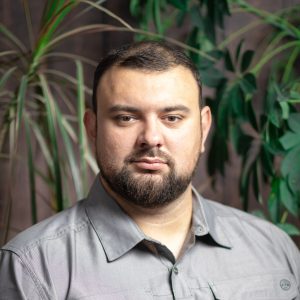
Operational Project Manager

Partnerships Project Manager
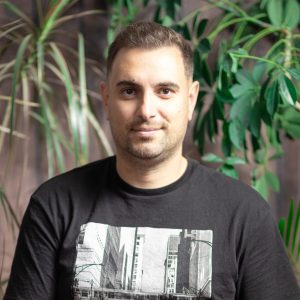
Forestry engineer
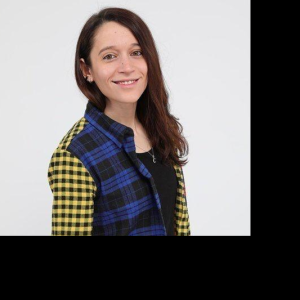
Bucharest Area Coordinator

Bucharest Area Coordinator
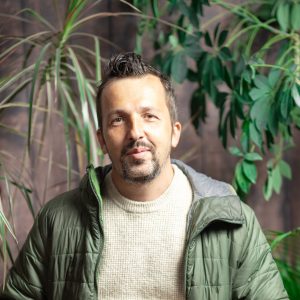
Logistics Assistant
Marketing Specialist